23/11/2008

How to obtain a girlfriend in 3 hours and then lose her an hour later


It’s all about cracking the ‘pulling equation’. Take into account the amount of targets per square metre in a particular location, then divide the price of an average single spirit, with mixer, with the average spending of the targets in the location. This will give you a figure you can begin to work with. For example 30 pound divided by one pound 50 will give you twenty as the ‘number’. Twenty is the amount of single measure spirit’s the target will consume. If we assume that 5 is the number that ensures intoxication, then 20 seriously increases your chances of being surrounded by intoxicated targets. Take the ‘number’ and multiply it by the amount of targets per square metre and you will have your ‘pulling figure’ for the night. There are obviously several anomalies that must be taken into account, the location, the atmosphere, the percentage of the alcohol among many other factors.

Now I have dealt with the Science/ Maths, lets begin with the real quiz. How to bag yourself the target. We all find ourselves in the same situation, knowing that the person we are 4/5ths of the time talking to, is generally a couple of leagues below our estimated expectations we have when we are not consuming alcohol. We generally can’t see ourselves holding hands with them watching Wicked at the theatre, or throwing a Frisbee with them on Brighton beach. However after 7 (Using the number explained in the first paragraph) these are not the thoughts that come to the forefront of our mind. Tits, Face (what you can see of it), and what your friends think are generally the primary thoughts at the beginning of meeting the target. Don’t be too forward with the target within the first 10 minutes, you are only likely to make yourself look promiscuous, and give the target the impression you don’t want to hear about why their friend is crying in the toilet or other trivial conversation ‘pieces’. Launch what I like to call the ‘subtly arrogant charm offensive’. Look slightly occupied, perhaps glancing over the targets shoulder at a fictitious friend, or receive a phantom text whilst keeping one eye on the targets malleable lips, and nod rhythmically, but not so much that you resemble Churchill the dog.

The targets acquaintances, are another essential stepping stone in the pursuit of ‘the pull’. A friend that’s mean, is a friend not keen. The target, 90 percent of the time, will consult an acquaintance to gain the ‘seal of approval’. Even if the target is a 4/10 they will still have more available options than you. This is an undisputable fact. Hence you will not only have to launch a charm offensive on them, but on their acquaintances too, unless you are the ‘James Dean’ of the location, then you will have the roles reversed. However the ‘James Dean’ of the club is still only the equivalent to the ‘Macy Gray’, in terms of potential success rate. Simply, the ‘Macy Gray’ has the same chance of ‘pulling’ as the ‘James Dean‘, because of Gender expectancy.

Once you have charmed the acquaintances, perhaps with a ‘body pop’ or a round of sambuca’s, you have the unwritten right to go in for the coup de gras, the piece de resistance…tonguing. This is essentially the culmination of all the hard graft from the tracks you have laid circa 2 hours ago. To know the perfect timing for the ‘lean in’ is fairly important, not critical, but just fairly important. There can be no hesitation, hesitation just leads to contemplation, and if you contemplate for too long then you may aswell psychologically ejaculate over the targets face, that’s how awkward it can become. Just read the signals. Flirting whilst cutting some shapes and constant eye contact are two key signals. It has got to be an instantaneous motion, no pauses and keep the mouth closed until lips doth touch.

Once the target has been breached, you can attempt to take things to the next level, base 2, maybe a finger in the clunge. However never immediately say what I have, after the first kiss,

“Does that make you my girlfriend now."

22/11/2008

The Enigma of Capital

David Harvey: The most famous Geographer in the world

Foreword

The following essay has been adapted from a lecture given by David Harvey at Royal Holloway University on the 20th November 2008. David Harvey is the Distinguished Professor of Anthropology at the Graduate Centre of the City University of New York (CUNY). A leading social theorist of international standing, he graduated from University of Cambridge with a PhD in Geography in 1961. He has since become the closest thing the faculty of Geography has to a ‘Celebrity’, being cited almost one thousand times in a discipline where receiving fifty citations is rare. He is the author of many influential books including the 'The Limits to Capital' and 'The New Imperialism'. This essay is the first in a series of short essays to be released weekly.

WARNING, the following article includes latent left wing ideas


"According to Marx, Capital is a process of the circulation of value.

For example ten cents in your pocket is not capital. Capital is the process that wants to get that ten cents out of your pocket" states the sagely Harvey leaning nonchalantly on his lectern.

[David+Harvey+Diagram.JPG]

Accumulation, Harvey points out, is technically limitless under the capitalist model above (diagram 1). Here we see M (Money) is generated my LP (Labour Power) and MP (Means of Production) which results in P (Profit) and C (Capital). Capital plus yesterday’s Profit is reinvested so you have initial Money (M) and DM (surplus money earned from yesterday). DM can then be used to buy DLP & DMP and turned into more surplus money thus continuing the cycle of ever expanding money. This process of ever expanding money can be seen in the growth of hedge fund managers remunerations which has grown rapidly (see table 1)

[David+Harvey+Box+1.JPG]

Harvey dryly poses the question, “If they had been paid in shoes what would they have done? Three Billion shoes, what about that…it didn’t do Imelda Marcos any good”.

He then goes on to talk about how the perpetual accumulation of money carries over into a social process in the Coercive Laws of Competition, which are;

1) One must Capitalise to stay in business. The difference between a Capitalist and a Miser is that a Miser saves it way, whilst the Capitalist must re-circulate it.

2) Money provides social power/security to private persons. For who would not want security and status?

Therefore Capitalism grows at a compound rate. This has been on average 3% since 1780. As you can see from the figures in Box 2 the size of the economy has been growing at ever-increasing rates and if Gordon Brown’s predictions are correct it could reach $100 Billion by 2030.

[David+Harvey+Box+2.JPG]

However, with the constant expansion of the economy there will inevitably be a problem with Capital Surplus absorption. If Brown’s 2030 predictions prove to be correct then by 2030 there will be $3 trillion each year to be absorbed. This is a problem that has been recognised by the IMF.

Harvey continues that Capitalism has to find a way of investing this surplus. He explains that this process is characterised by limits and boundaries (outlined in Marx’s Grundrisse) and poses the question, “What does Capitalism do when it confronts limits”? The answer? It turns its limits into barriers, which can be transcended or circumvented.

"So where does money come from?" poses Harvey rhetorically.

The explanation offered by Harvey is that of ‘Predatory Primitive Accumulation’, a process of raiding other people’s/nation’s of their materials/resources. An example of this is when the Spanish stole the Inca’s gold and removed it from South America. This process has been prevalent throughout history and legitimised by bourgeois governments during the process of imperialist conquest and colonialism. However, Marx suggests that Predatory Primitive Accumulation is only the springboard from which to launch other processes that sustain Capitalism. It is in fact a diminishing trend as economies internalise production of Surplus. But as Harvey stresses, PPA, Neo-colonialism and exploitation has never gone away. What we now see is a dual way of raiding foreign assets combined with the internalised reticulating explained previously.

Summary

In this first installment Harvey has outlined, using Marxist theory that the expansion of Capital and thus Capitalism is theoretically limitless and self perpetuating as it is able to turn its limits into barriers, which can be transcended and circumvented. In my next installment we will find out how Harvey believes they do this.

Major works

  • Explanation in Geography (1969)

  • Social Justice and the City (1973)

  • The Limits to Capital (1982)

  • The Urbanization of Capital (1985)

  • Consciousness and the Urban Experience (1985)

  • The Condition of Postmodernity (1989)

  • The Urban Experience (1989)

  • Teresa Hayter, David Harvey (eds.) (1994) The Factory and the City: The Story of the Cowley Automobile Workers in Oxford. Thomson Learning

  • Justice, Nature and the Geography of Difference (1996)

  • Megacities Lecture 4: Possible Urban Worlds, Twynstra Gudde Management Consultants, Amersfoort, The Netherlands, (2000)

  • Spaces of Hope (2000)

  • Spaces of Capital: Towards a Critical Geography (2001)

  • The New Imperialism (2003)

  • Paris, Capital of Modernity (2003)

  • A Brief History of Neoliberalism (2005)

  • Spaces of Global Capitalism: Towards a Theory of Uneven Geographical Development (2006)

  • The Limits to Capital New Edition (2006)

  • The Communist Manifesto- New Introduction Pluto Press (2008)

Social Networking and Sillyness.


Social networking sites are literally everywhere. In your bookmarks, set as your home page, on your phone, in your thoughts, emblazoned 'pon your retinas. There is no escape. Therefore, we succumb. And the worst part is, we enjoy it. Like beaten wives (Wooding. 2008) we return every two hours, trembling and tearful, in hope of the little red flag in the bottom right of our screens. This, I feel, is common knowledge. Even those stuck in 2004 still using MySpace, or worse the 40 million worldwide who somehow got lost on their way to present, and are still using Bebo are dictated by this monotonous and oppressive regime we call the social network. But why? It is because we are scared.

Scared of what, you ask? I shall explain.

Social Networking sites have become a substitute for reality. The history of history sees an historical shift; one from speaking to writing. As society develops, so limits of it's communication increase, for example, before the advent of letters you'd either walk fifteen miles to your neighbours house to borrow some sugar or shout at the top of your voice that you needed some sugar, and hope that he would hear. (Coincidentally it seems that before writing no one thought of going to the shop and buying some, but that is besides the point.) But with writing we could send a letter, wait 2-5 days for delivery depending on how much you can afford to spend on stamps and wait for a reply depending on the same factors and eventually get your sugar. But with the internet and social networking sites, an international forum has developed, meaning you can ask anyone around the world at any time if you can borrow some sugar (though I doubt UrBaN_PrInCeSs.bebo.com is going to oblige).

Leaving sugar aside for a moment, we can proceed to our main objective. We can track throughout history a gradual decline of the direct social situation, from storytelling to written documentation to the internet, a sense of reality of communication has been lost, leaving us scared of the reality of close word combat. To extend this analogy, we have gone from fighting with sticks, to fighting with red buttons with plastic safeguards in big white rooms full of computers that actually do nothing at all; and it is for this that Social Networking sites are to blame.

An example; status updates. The expression of one's inner subjective notions is no longer a verbal or physical explosion (screaming at someone, or kicking them for example), but is now a 140 character passive aggressive 'news feed' entry that some people will read but no one will care about.

A second example; the poke. Without doubt the third most annoying attribute of Facebook (behind of course invites to Ninja vs. Pirate games or Rate Me applications), the poke is just another way of saying; “I'm too scared to talk to you but I'm happy to engage in metaphorical sex with you”.

Facebook's powers, however, do not stop there. We turn our attention to the name analyser. An acrostication of the forename into a set of random characteristics which have no intended relation to the true nature of the signified, the name analyser is forcing away from progression as regards fluidity of character and personality. Moving us back one hundred years, this application undercuts post-Victorian social anthropology promoting the taxonomisation and projection of false culture upon the colonies that we so endorsed in the late nineteenth century. Taking this further, then, we can conclude that by projecting its values upon us, the name analyser not only categorises us inaccurately, but creates a power hierarchy; with Facebook at the top (the colonisers) and us at the bottom (the colonised).

To conclude. Firstly, congratulations for managing to get through this insanely boring and contrived article that probably has brought nothing to your life but a slight sense of satisfaction that you are not its author. However I do hope this article has opened your eyes to the powers of social networking sites, as they alter and control our society in terms of language, social structure and sillyness.

On the Awkwardness of Lifts


Consider the lift. We seldom do! Once the sole preserve of the upper classes, staffed by expertly trained button pressers in red gilded uniforms whose job it was to whisk the rich and/or famous up to five star hotel rooms, the elevator is now an indispensable, unavoidable component of the modern cultural machine.

The elevator was invented by Otis Persons VIII in the fin-du-siecle, his dream being one of a marvellous mechanical stairway, whizzing the industrious denizens of the Big Apple up and down the towering skyscrapers that would come to dominate that booming metropolis. As time went by, the Otis expanded into every nook and most crannies of western society. Where big buildings were built, Otides would be installed. When Canary Wharf was built c.1990, the lift became vital for the upwardly mobile when they wished to mobilise upwards

.http://media-2.web.britannica.com/eb-media/74/3274-004-7452C015.jpg

Otis Persons VIII

Today's point'n'click push-button technology enables and empowers even the lowliest citizen. Why, this blog itself, being written from the thirteenth floor of the iconic Dalehead, is founded on the lift. Without our friend Otis we would all be too tired and would likely just half-finish a wank and nod off.

But humanity's newfound verticality comes at a price. That price is the risk – and this risk is high – that one will find oneself in a small room (with no seating) with a near-perfect stranger for a period of a minute or more. These situations are frequently uncomfortable, sometimes downright awkward. The period of time spent in a lift is never long enough to necessitate conversation, but never short enough to excuse forgoing it entirely.

Compare and contrast this to the understood rules of a crowded bus journey; two adjacent passengers anticipate a long ride, so the potential benefits of sparking up some banter are outweighed by the almost inevitable risk of a prolonged silence when they have run out of things to say, and are left idle at the bow of a conversation that has run aground without the words to float it. This allows both parties to share a halfway comfortable silence.

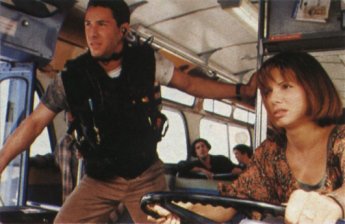
http://www.omenaheights.com/speed_reeves_bullock.jpg

At the other extreme, encounters of only a few seconds (e.g. when buying a newspaper) are much easier – if one party should choose to crack a joke or make some other remark, they have an insurance policy. Should the receiver not take it well, the speaker has only to endure their disdain for a very brief period.

Here are some things you can do to break or endure an elevator silence:

  • Sigh loudly and longly. All the time you are sighing, you are excusing yourself from having to say anything. If possible, start a 'what a day!' sigh as the doors close and sustain until the doors open again. Nod and leave.

  • Raise eyebrows at your companion and breathe in through your teeth while grinning. This will endear you to them.

  • Have a coughing fit

  • Have a laughing fit

  • Have a seizure

  • Make polite conversation. Like a normal human.

  • Pass wind. If possible, sustain for duration.

  • See how long you can look at their eyes before they look at your eyes. Keep a score in your head. Deduct points should you actually make direct eye contact.

  • Eat. If you don't have any food, pretend. Offer them some.

  • Stand in the corner, facing the corner. This technique is virtually foolproof.

  • If you are a child or a coward, the phantom phone call is an option.

  • Wait it out until just before the doors open, then tell them how much you've enjoyed your time together and promise to stay in touch.

Good luck!